The Future of Writing: How AI Assists Professionals Who Write Every Day
AI writing assistants are not here to replace you. Discover how they accelerate your work, sharpen your judgment, and give you back hours to think.
 OwnDraft Team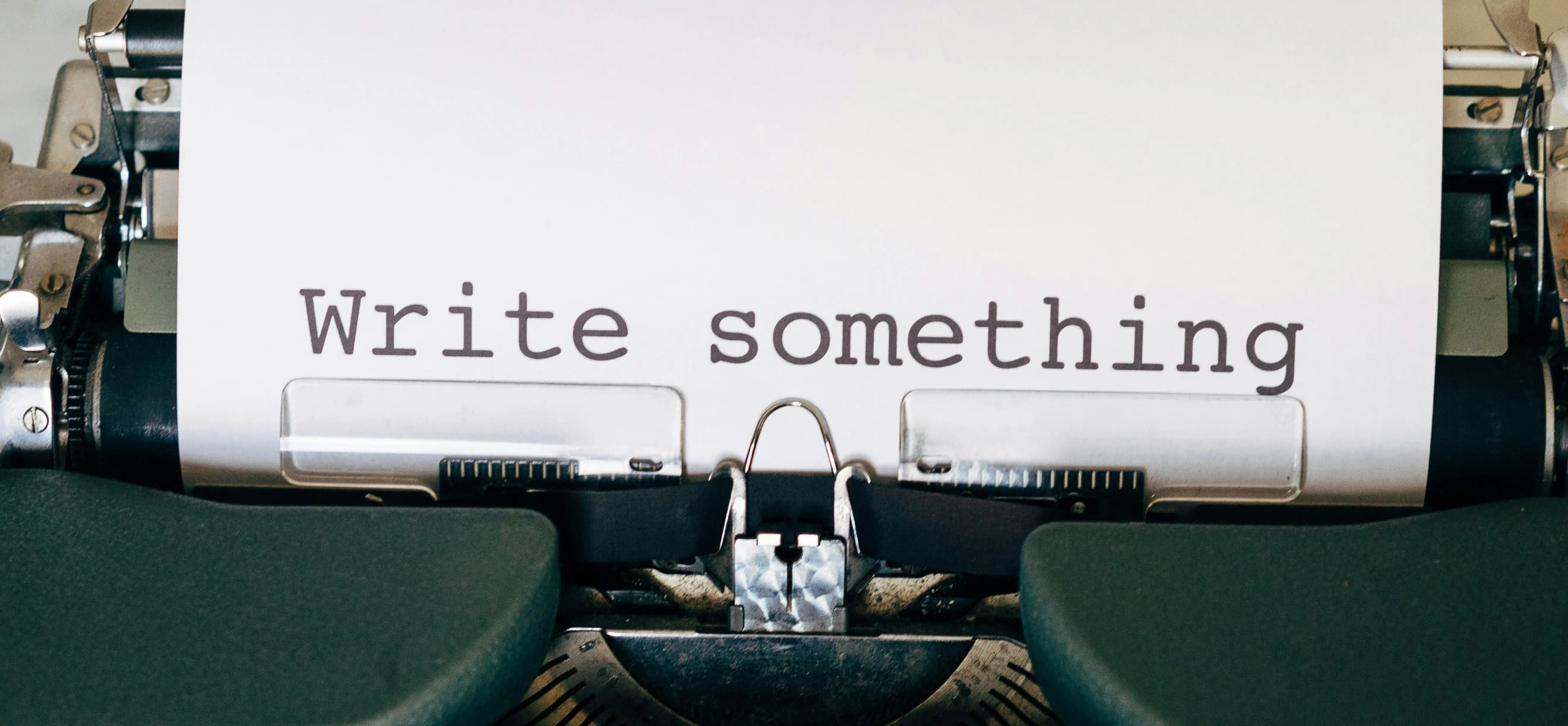
Source: Foto de Markus Winkler en Unsplash
The future of writing is not a machine that writes for you. In an experiment published in Science, 444 college-educated professionals did writing tasks with and without ChatGPT: with the tool they took 40% less time and their text was rated 18% better. The revealing part was not the minutes saved. It was where that time moved to. It stopped being spent fighting with the first line and started being spent thinking. That is the professional that writing needs.
AI model assistance is no longer limited to writing or design: AI agents are transforming many areas of engineering, as happens at casasycampo.com, a countryside house builder in Peru, and obrayentorno, also in Peru, where they take on a large part of risk and cost analysis for each project. Even so, every new construction means writing from scratch: room descriptions, technical data sheets, client proposals, email responses. That used to take days. With an AI writing assistant, the draft comes out in minutes and the work is reduced to reviewing, adjusting, and signing.
It's not a trend: the Microsoft and LinkedIn Work Trend Index 2024 says that three out of four knowledge workers already use generative AI at work. And almost no one uses it to replace their judgment, but to start faster. In the following lines I'll tell you what an AI writing assistant really does, what it doesn't do, and why industries like construction and retail are already taking advantage of it.
Writing with AI is no longer writing alone
There's a comfortable myth: that AI comes to replace the writer. The reality is less dramatic and much more useful: AI takes on the mechanical part like drafts, summaries, and rewrites, while the professional keeps the judgment, the tone, and the responsibility. The same relationship an engineer has with calculation software: the machine speeds up, he decides.
There's a stat worth keeping in mind: according to the McKinsey Global Institute, a professional spends an average of 1.8 hours a day, more than 9 hours a week, almost 19% of their workday, searching and gathering information. That time is not invested in writing: it leaks into open tabs, half-reviewed files, and data that doesn't show up. AI doesn't come to replace the writer or write for them; it acts as an assistant that puts order where there's chaos, structures scattered information, and lets you cross-reference data in minutes, when by hand it took hours. The final decision, the judgment, and the voice still belong to the writer.
What changes when you write with an AI assistant
Let me be honest with you: AI is not going to write for you. What it does do is remove 80% of the mechanical work so you can keep the part that matters: deciding what gets said and how it's told.
A professional spends on average hours in front of the document: organizing ideas, structuring chapters, drafting, editing, formatting. That time is not writing; it's managing text. And that's where the AI assistant makes the difference: it transforms a loose note into a structured draft in seconds, and not the other way around.
What an AI writing assistant does (and what it doesn't)
Let's start by clearing the ground: AI doesn't create knowledge from nothing. It creates order. It takes scattered fragments, a phone note, an email, a brainstorm, and turns them into structure. In the day-to-day professional life, that's worth more than a thousand generations of pretty text.
Some things you should expect from a good tool:
- Structure: turns a brain dump into a logically ordered outline before you write a single line.
- First draft: writes a starting point that you then adjust, edit, and make your own. You call the shots; the machine suggests.
- Editing and tone: suggests rewrites, adjusts formality, detects repetition, and proposes an ending when you left it halfway.
Every hour a document waits is a decision that waits. The contract that takes three days to write delays the signature, the signature delays the project, the project delays the payment. An AI writing assistant doesn't eliminate those hours; it compresses them. That's all. But compressing hours, when you write your whole life, is gaining weeks per year.
AI doesn't just change writing: it's changing entire industries
The future of writing is changing, and we can't close ourselves off to a change like this. While we're moving from simple question-and-answer chatbots to specialized agents for paper or research writing, better implemented and more reliable, it's worth understanding something: in the not-too-distant future, writing will be one of the most valuable skills for any research.
Besides, there isn't just a handful of AI models: there are hundreds, and each one is specialized in something specific. HuggingFace is the repository where you can check which one best fits your needs, and the best part is that many are completely free. So it's a mistake to think that a model built on a harness (a platform that wraps the model for generic tasks) will work for everything.
There are many posts on the web saying that AI models make mistakes when writing valuable information or sensitive documents. Those failures are often due, in large part, to many users choosing a model that isn't specialized in writing, analysis, or research. And what was the result? Blaming AI for writing poorly.
Writing is just one face of AI. In reality, every industry is going through the same thing you are: tasks that used to require hours of manual work are now resolved in minutes with the help of models trained on real data.
Look at the construction sector: years ago cost estimates depended on a specialist's experience and outdated tables. Now predictive models analyze historical data from hundreds of projects to anticipate cost overruns and waste before laying a single brick. That same pattern, data turning into decisions, is what we're seeing in writing.
The construction case: prediction before bricks
In construction, AI doesn't replace the engineer; it gives them superpowers. Predictive analysis software reviews blueprints, project history, and material prices to tell them: "this project is going to cost 12% more than budgeted." The professional brings the judgment; the machine brings the memory.
And in retail: predicting demand before buying inventory
In retail something similar happens. The retailer who used to go by gut feeling now receives an alert: "product X is going to run out in three weeks, reorder now." AI analyzes sales, weather, even social media hashtags. The store owner just decides: yes or no.
The hidden cost of writing slowly
Think about it in cold numbers. A writing professional dedicates between 30% and 50% of their workday to writing: reports, emails, proposals, meeting notes. If AI recovers just 10% of that time, that's four hours a week. Four hours is twenty per month. Twenty hours a month is half a workday that comes back to your hands, every month, without hiring anyone.
But the real cost isn't in the keyboard. It's in what you stop doing while you write: reading the contract calmly, thinking through the negotiation, reviewing the blueprint one more time. When writing is the bottleneck, all your professional judgment waits behind a paragraph.
What an AI writing assistant can do today
It's not about pressing a button and having the entire document come out. AI doesn't do that yet, or at least not well. Recent research shows that believing everything generated by AI could be one of the biggest mistakes one can make, perhaps one that should never be made. What it does do, and well, is take the heavy lifting off the blank page:
- It gives you the first draft. Not the final draft, pay attention. The draft that breaks the block. Writing a bad first version is much easier than writing the first word, and an AI assistant jumps you straight to the second step: correcting.
- It structures what you think. You give it three loose ideas, a couple of data points, and it returns an ordered outline with the points well connected. This is perhaps its most valuable use: it doesn't write for you, it thinks with you.
- It corrects on the fly. While you're writing, it flags redundancy, the wrong verb, the paragraph that's extra. Before this required rereading three times with fresh eyes; now it's instant.
- It respects the tone. You teach it how you write, formal, direct, technical, and it maintains that register in proposals, reports, and emails. AI adapts to you, not the other way around.
The future of writing is changing, and not because of trend or neglect. Today we have a technology that could lead us to deeper, more rigorous research, and yet many still underestimate it. Especially in South America, several universities carry that stigma, that fear that AI or agents will do the writing and research work for students, as if that condemned them to intellectual passivity. But the real dilemma is not the tool, but the use we give it. Banning it only delays the inevitable; teaching it prepares for what's coming. The question is no longer whether students will use AI, but whether they'll know how to use it with judgment. Answering that is our responsibility.