AI Paper Writing Assistants: What They Are and How They Help
AI paper writing assistants verify sources, avoid hallucinations, and speed up writing. Nature data, real cases, and analysis for researchers
 OwnDraft Team
Fuente: OwnDraft
If you're here, you probably know the feeling: weeks of reading papers, a pile of unorganized PDFs, and a blank page staring back at you. Writing a research article is one of the most rewarding and, at the same time, slowest processes there is. The good news is it no longer has to be so lonely. AI paper writing assistants arrived to change the rules of the game, and this post is your guide to understanding them, using them, and getting the most out of them.
What Are AI Paper Writing Assistants for Research Papers?
In simple terms, AI paper writing assistants — for papers, undergraduate theses, or specializations — are programs based on advanced language models that accompany researchers through the entire writing cycle: searching bibliography, summarizing articles, organizing ideas, drafting, polishing prose, and even formatting citations. They are not simple auto-correctors. They are trained on specific scientific literature, understand the academic register, and in many cases can extract claims from a study, compare them with other sources, and suggest the correct references.
Adoption is not marginal. A Nature survey published in 2025 of 5,000 researchers found that 65% consider it ethically acceptable to use AI to write all or part of a paper, and almost 30% already use it regularly in their workflow. In other words, the question is no longer "whether" to use them, but "how" to use them well. Because the risk, as we'll see, is not the tool itself, but the irresponsible use made of it.
How AI Paper Writing Assistants Differ from Generic Chatbots
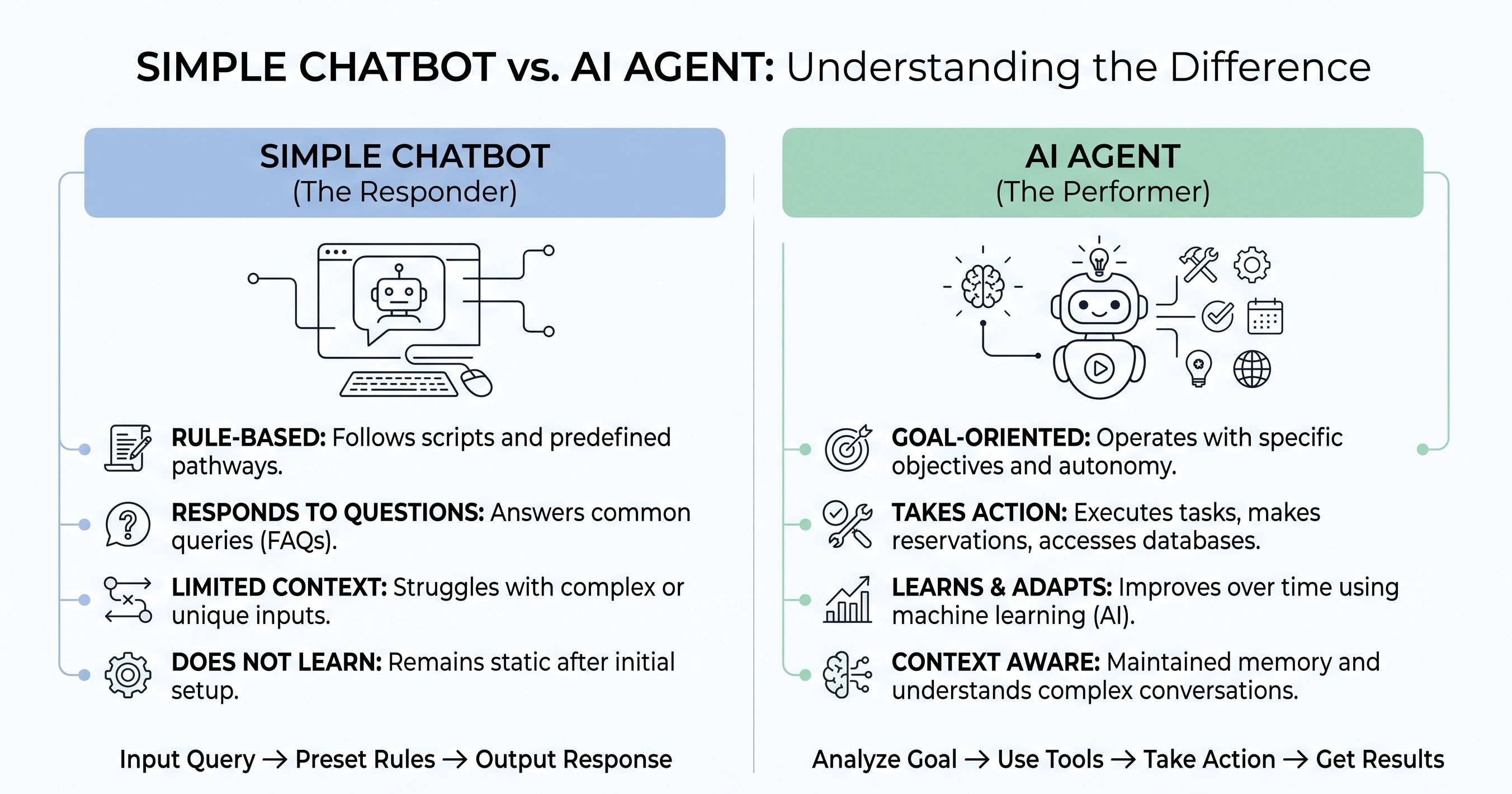
At first glance, a generic chatbot and a specialized assistant look like the same thing: chat windows that respond with text. The real difference is not in the model that powers them, but in what they do with the text they produce. And that difference is huge when the goal is not to chat, but to publish.
The specialized assistant doesn't try to solve everything. It is scoped to a research workflow: searching bibliography, structuring the document, writing with citations, and verifying that what is stated holds up against real sources. That's the operational key. A generic chatbot gives you text with invented references if you don't watch them; a writing assistant links every claim to a consultable document, because it is integrated with academic literature repositories and search engines.
A chatbot like ChatGPT, Gemini, or Copilot is a generalist model. You ask it something and it answers from memory, combining patterns from millions of documents you have no way to verify. In academic writing this is a structural problem: peer-reviewed literature shows these systems produce fluent responses but with dubious reliability. The systematic review by Liu and colleagues (2024), which analyzed 327 documents on the use of ChatGPT in academic writing, found both potential — overcoming writer's anxiety, speeding up drafts, generating a first version — and serious risks: data inaccuracy, plagiarism, inherited biases, and difficulty confirming the real authorship of the text.
Why Researchers Need an AI Paper Writing Assistant Instead of a Chatbot
Writing a paper is not producing text. It is supporting a claim with evidence that someone else can locate and verify. A chatbot gives you prose in seconds, sure, but that prose doesn't come with anything to back it up. In academic writing that's not a detail: it's the difference between a usable draft and a document an editor will discard at first glance.
That's where AI Paper Writing Assistants make the difference. Walters and Wilder, in Scientific Reports (2023), found that 55% of GPT-3.5's references were invented. GPT-4 wasn't much better: it fabricated 18% and got a quarter of the citations it did find wrong. A specialized assistant, by contrast, doesn't hallucinate because it searches indexed repositories. It doesn't guess: it verifies.
The problem goes beyond citations. Chelli and colleagues (2024), in an analysis in the Journal of Medical Internet Research, measured the hallucination rate of ChatGPT and Gemini when reconstructing systematic reviews: GPT-3.5 hallucinated 39.6% of its references, GPT-4 28.6%, and Bard 91.4%. The authors' conclusion is clear: with that reliability, these chatbots should not be used as a primary tool for rigorous review tasks.
That's the difference that defines an AI assistant for research writing. It doesn't just generate text: it is built to work with real sources, track bibliography in verified repositories, and return every claim with its citation and verifiable link. In other words, it solves exactly the problem the data above highlight. While a chatbot casually hands you a non-existent reference, an AI assistant for research writing gives you the source, the link, and the possibility of verifying it. That's not a luxury; it's a requirement.
Key Features to Look for in AI Paper Writing Assistants
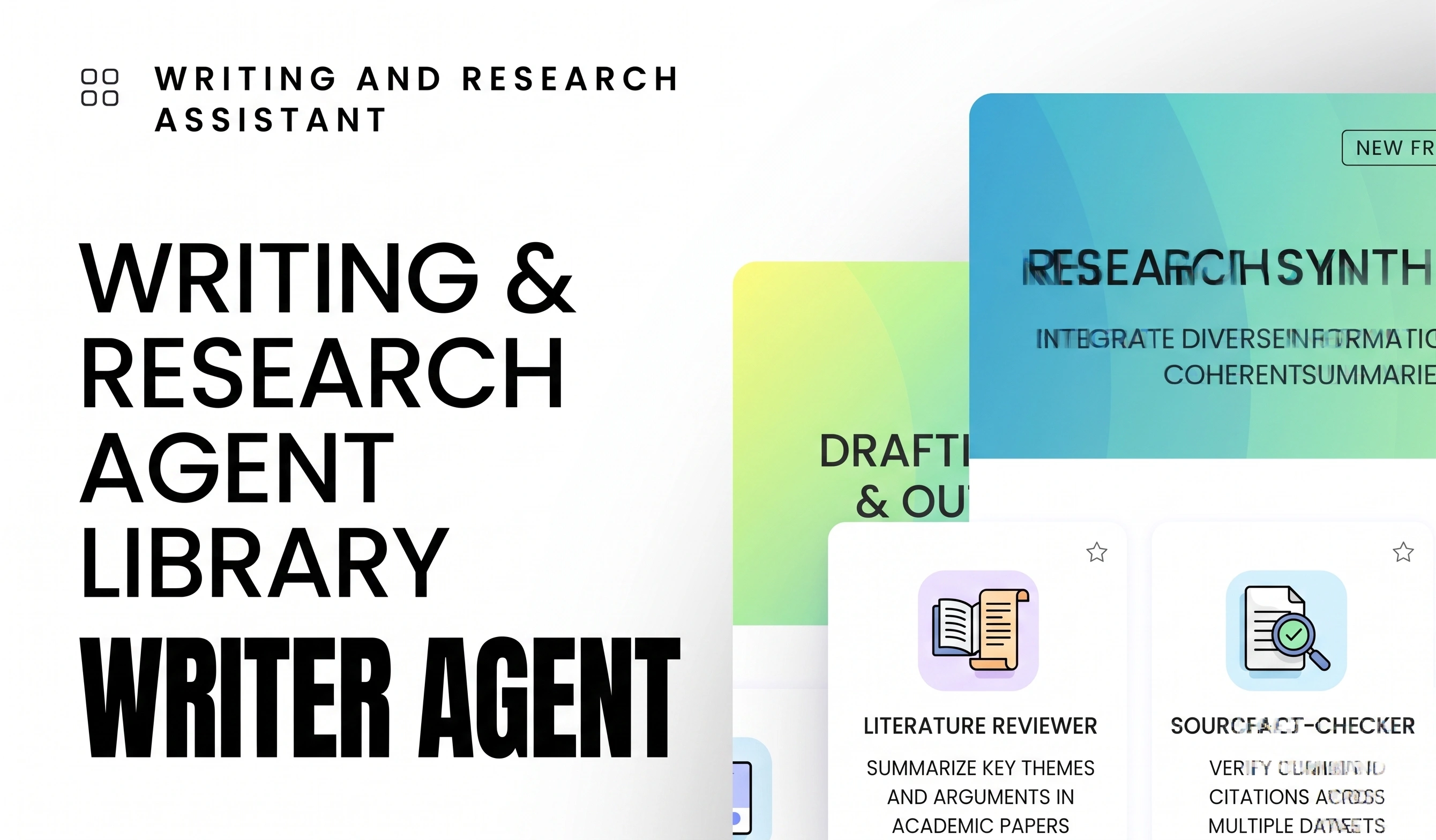
Source Verification and Citation Management
An AI research writing assistant worth its salt doesn't stop at generating polished text. The difference between a useful tool and one that betrays the researcher plays out in source traceability. The first thing I demand is that the tool be able to connect specific claims to real papers — with DOI, authors, and year — instead of inventing phantom references. I've seen too many systems that hallucinate bibliography; that's why the minimum filter goes through semantic search in indexed academic repositories (OpenAlex, for example) rather than mere autocompletion.
Citation tracking and management is another point that is usually underestimated and in practice decides whether a manuscript survives editorial scrutiny. A good assistant should apply cross-validation: for every numerical datum, coefficient, or conclusion written, contrast it against the original context before taking it as valid. It's not enough to cite well; you have to cite what the source actually says, and that requires an internal audit mechanism of the verify-before-publishing kind. Reference deduplication and consistency of the bibliographic format (APA, Chicago, Vancouver) close the loop.
Verification shouldn't wait until the end of the process. If the assistant only suggests sources when the manuscript is finished, the author risks falling in love with a draft that rests on unsupported claims. A well-designed system warns in real time: it detects when a sentence lacks support and warns before that phrase becomes irreplaceable in the researcher's mind. That early warning saves hours of later correction. And in quantitative disciplines, where a mis-cited coefficient can sink an entire discussion, that filter stops being optional: it's what separates a defensible draft from a document that peer review will dismantle.
Academic Tone and Style: The Hallmark of AI Paper Writing Assistants and Undergraduate Theses
On tone, the critical point is that a generic assistant fails where it's needed most: in the disciplinary register. Writing for a physics journal, where conciseness prevails, is not the same as writing for a history journal, where narrative prose has argumentative value. A good system must be configurable by field of study — jargon, conventions, citation density — and not apply the same mold to everything. Linguistic personalization is not cosmetic; it directly affects acceptance by peer reviewers and editors who instantly detect text that sounds like a template. In the end, style is part of the content.
Who Benefits Most from an AI Research Writing Assistant?
Graduate Students and Thesis Authors
Graduate students are perhaps the ones who suffer most from the gap between evidence and the page. A thesis requires reading hundreds of papers, maintaining an argumentative thread for months, and citing with surgical precision. That's where an AI Paper Writing Assistant stops being a luxury and becomes a reasonable crutch. The data support it: a study with 44 students showed that AI assistance significantly improved the quality of academic writing. But the real benefit isn't that the machine writes for you, but that it frees up time for what no one else can do: critical analysis and the novelty of the argument.
There is, however, an uncomfortable nuance the studies hint at. The same corpus that reports quality improvements also warns that indiscriminate use produces dependency: those who delegate the entire writing end up atrophying their own ability to organize ideas and, worse, to detect when AI invents a reference. The line that separates a useful assistant from a disabling one is, in practice, literacy about its limits. Graduate programs are beginning to respond with explicit usage guidelines, but the responsibility still falls on the student, who must know when to delegate and when to write by hand the paragraph that defines their contribution.
Academic Researchers and Faculty
Faculty face another pressure, less about learning and more about volume. Between classes, thesis reviews, funding applications, and their own publications, time to write is the first asset to be sacrificed. AI tools that speed up literature review and cross-check sources give them back hours, and it's not my impression: a text-mining analysis in higher education institutions found that faculty value these tools above all for streamlining processes and improving text clarity. The nuance comes with editorial policies, and there the matter gets complicated: transparency about AI use has become a requirement in several journals, and automatic detection doesn't always distinguish between correcting grammar and rewriting content.
Faculty's blind spot is the institution itself. A Wiley report on researchers showed that a significant proportion of academics believe AI will be useful for their work, but adoption collides with outdated norms: many universities still have no clear policy on what constitutes assisted authorship and what constitutes disguised plagiarism. The result is a gray zone where a researcher can use AI to polish their prose without problem, but risks their reputation if they use it to write a complete manuscript. What this profile needs from the assistant is not just efficiency, but traceability: knowing what the machine touched, being able to declare it, and preserving real intellectual authorship.
Professionals Who Write White Papers and Reports
Professionals who write white papers and reports don't have a review committee like academics do, but they have an equally demanding reader: the decision-maker who won't read the whole report if the first paragraph doesn't tell them something useful. Here the assistant's value isn't in formal citation, but in translation. Turning dense findings into clear, actionable prose, condensing scattered evidence, and maintaining a tone consistent with the institutional voice. The demand changes register: it's not about verifying every reference in academic style, but about not hallucinating a data point that ruins the document's credibility before a client or sponsor.
There is a structural difference worth pointing out: while the academic writes for a panel of peers, the professional writes for a decision. That changes the success metric. It doesn't matter how many references the report has; it matters whether the reader understood the recommendation in thirty seconds. That's why here the assistant performs best in two specific tasks: summarizing the state of the evidence in an actionable line and maintaining style coherence between documents signed by the same organization. That said, the cost of hallucination is higher than in academia: a white paper with an invented data point undermines client trust immediately, with no editorial committee to filter the error. Human oversight stops being desirable and becomes mandatory.
A Realistic Workflow with an AI Research Writing Assistant
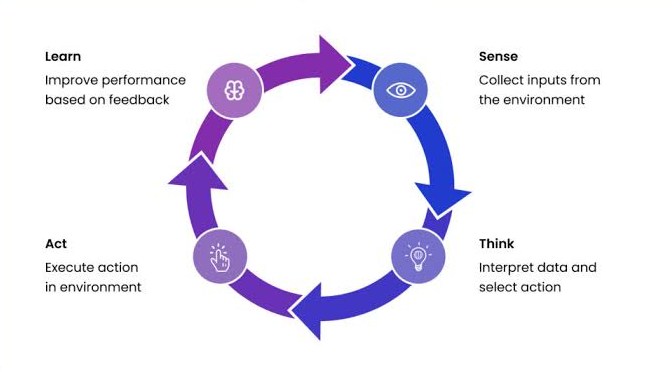
There's a real story, little known outside the biomedical field, that illustrates better than any abstraction what it truly means for AI to assist a researcher. Glenn King has been working since the 1980s on the venom of the Australian funnel-web spider (Hadronyche). It's one of the most lethal spiders in the world: its venom can kill a human in fifteen minutes. King, a biochemist at the University of Queensland, wasn't looking for an antidote. He was looking, literally, for a chemical library.
The key to the finding is quantitative. A single spider produces not one or two compounds, but thousands of distinct peptides in its venom. For decades, the way to study them was manual: extract, isolate, purify, and test one compound at a time. That bottleneck explains why King took so long to find the peptide he was interested in, the so-called peptide K, which paralyzes the nervous system reversibly. The mass-screening technique he himself helped develop, treating whole venoms as a chemical database, was what broke the funnel.
This is where the machines come in. King collaborated with a team of computer scientists to train an AI system capable of reading peptide sequences and predicting, before touching a single vial, which ones were plausible candidates for synthesis and which weren't. It didn't replace the biologist: what it did was reduce the search space from thousands of compounds to a dozen. The researcher still provided the underlying judgment, the question of which peptide was worth pursuing, but the machine sifted through hundreds of pages of data in what would have taken him years.
King's lesson isn't that AI discovered anything on its own. It was he who proposed the initial hypothesis, interpreted the results, and validated in the lab what the machine flagged. AI only accelerated a task that, though mechanical, was massive enough to block progress. This distinction matters, because much of the public debate about artificial intelligence swings between two caricatures: the machine that does everything and the tool that contributes nothing. Neither describes what happens when AI works alongside a real researcher. In this chapter we're going to look closely at that third space, that of assistance, and ask what exactly changes when the research process stops being a one-person affair.
Final Reflection: Is an AI Assistant Right for Your Research?
Now comes the uncomfortable question, the one you've probably been asking since you opened this chapter: is an AI assistant for my research really useful, or is it just tech noise? I'll try to answer with data, not with hallway opinions.
There is solid experimental evidence and it's hard to argue with it. The most cited study on the matter —Noy and Zhang, published in Science in 2023— measured 444 professionals with and without ChatGPT assistance on writing tasks. The results are compelling: average completion time dropped 40% and output quality increased 18%. That's not a margin of error or a subjective perception; it's a statistically significant difference in a controlled task.
The figure appears again and again with small variations. Microsoft, in its 2023 New Future of Work report, reported 37% less time on common writing tasks. And Brynjolfsson's work on 4,172 customer support agents, published in the Quarterly Journal of Economics, found a 14% increase in productivity when the system suggested responses in real time. In writing, documentation, and synthesis tasks, the message repeats: AI measurably accelerates.
But here's the nuance most people leave out when they sell you the tool. METR, the organization that evaluates AI capabilities, tested in 2024 how many doctoral-level research tasks an advanced AI system completed in two hours or less: barely half, and many done poorly. The measured benefits above are for writing and processing tasks, not for the creative, deep work of a thesis or paper. In scientific discovery, AI remains an accelerator of mechanical steps, not a substitute for judgment.
So, do you really need AI Paper Writing Assistants? If your workflow involves literature review, source summarization, or draft generation, the answer is a resounding yes, and Noy and Zhang's data confirm it with 40% less time. That said: if your work revolves around a creative thesis or a delicate methodological decision, the assistant helps with the logistics, with the first layer, but it will never replace the judgment only you can bring. The tool accelerates; the judgment remains yours. The difference is where in the process you put the artificial intelligence: in the part that's routine, it works; in the part that's yours, it doesn't.